
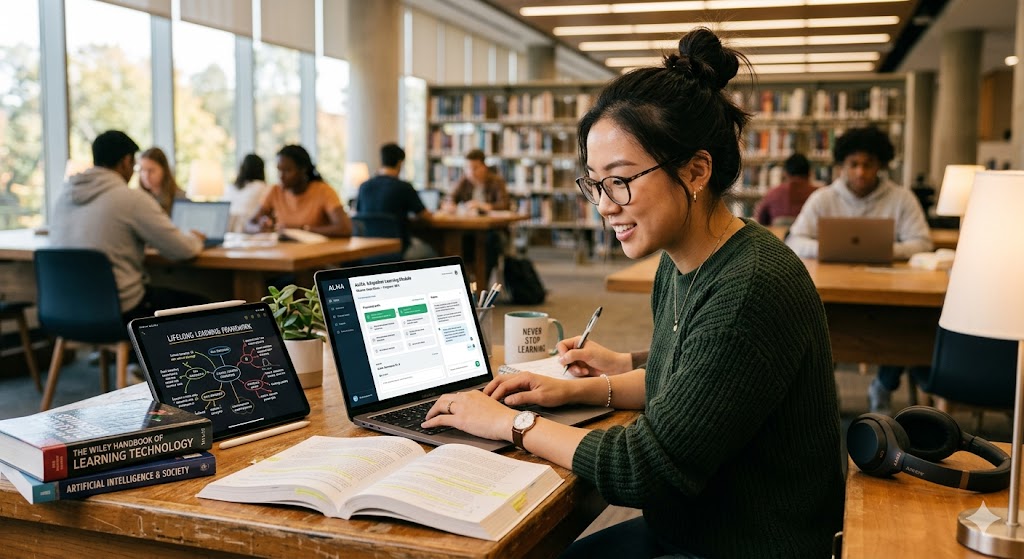
Introduction
In the past, many people believed that learning ended after graduating from school or university. Once they earned a degree and found a job, education was considered complete.
Today, however, the world has changed dramatically.
Rapid advances in technology, Artificial Intelligence (AI), globalization, and digital transformation have accelerated the pace of change across every aspect of life. Skills that are valuable today may become outdated within a few years.
In this environment, one ability has emerged as the most critical skill for success: lifelong learning.
The capacity to continuously learn, adapt, and improve has become essential for thriving in the 21st century.
A World That Never Stops Changing
Modern society is experiencing unprecedented transformation.
New industries are emerging, traditional jobs are evolving, and technological innovation is reshaping the workplace.
Consider some of today’s realities:
• Artificial Intelligence is transforming industries.
• Automation is replacing repetitive tasks.
• Businesses are becoming increasingly digital.
• Education is expanding through online platforms.
• Communication is more global than ever before.
As a result, individuals must constantly update their knowledge and skills to remain relevant.
Those who stop learning risk being left behind.
What Is Lifelong Learning?
Lifelong learning refers to the continuous pursuit of knowledge and skills throughout a person’s life.
Learning is no longer limited to formal education or classroom settings. It can occur through:
• Books and publications
• Professional training programs
• Workshops and seminars
• Online courses
• Work experience
• Educational podcasts
• Mentorship opportunities
• Professional communities
• Artificial Intelligence tools
In essence, lifelong learning transforms education from a temporary phase into a permanent lifestyle.
Why Lifelong Learning Matters More Than Ever
- It Helps People Adapt to Change
Adaptability is one of the most valuable qualities in today’s world.
People who continue learning are better prepared to respond to new challenges, technologies, and opportunities. - It Enhances Career Competitiveness
Employers increasingly seek individuals who demonstrate curiosity, growth, and the willingness to acquire new skills.
A degree may open doors, but continuous learning helps keep those doors open. - It Creates New Opportunities
Every new skill has the potential to unlock new opportunities.
Many successful careers and businesses began when individuals decided to learn something outside their comfort zones. - It Builds Confidence
Knowledge increases competence, and competence strengthens confidence.
People who continuously develop themselves tend to feel more prepared to face uncertainty and make important decisions.
Essential Skills for the 21st Century
Experts frequently identify several key competencies necessary for future success.
Critical Thinking
The ability to analyze information and make sound judgments.
Creativity
The capacity to generate innovative ideas and solutions.
Communication
The skill of expressing thoughts clearly and effectively.
Collaboration
The ability to work productively with diverse teams.
Digital Literacy
The competence to use technology responsibly and efficiently.
Adaptability
The willingness to embrace change and learn new ways of doing things.
These skills are not developed overnight; they require continuous learning and practice.
Challenges to Lifelong Learning
Although lifelong learning is essential, it is not always easy.
Busy Schedules
Many people struggle to find time for personal development.
Digital Distractions
Social media and entertainment platforms compete constantly for attention.
Comfort Zones
Some individuals believe they already know enough and stop seeking new knowledge.
Fear of Failure
Learning something new often involves making mistakes, which can discourage people from trying.
However, growth begins when individuals step beyond their comfort zones.
Artificial Intelligence and New Learning Opportunities
The rise of AI has created exciting possibilities for education.
Today, AI can help people:
• Understand complex concepts.
• Summarize lengthy materials.
• Create personalized study plans.
• Conduct research more efficiently.
• Serve as virtual learning assistants.
While AI is a powerful tool, it cannot replace human curiosity, creativity, and wisdom.
Technology can support learning, but the desire to learn must come from within.
The Islamic Perspective on Lifelong Learning
Islam strongly encourages the pursuit of knowledge throughout life.
Allah says in the Qur’an:
“And say: My Lord, increase me in knowledge.”
(Qur’an 20:114)
This verse demonstrates that seeking knowledge should never stop.
A Muslim is encouraged to continuously improve intellectually, spiritually, and professionally.
Learning is not merely a worldly pursuit; it is also an act of worship and a means of drawing closer to Allah.
How to Develop a Lifelong Learning Habit
Read Every Day
Set aside time daily for books, articles, or educational materials.
Set Learning Goals
Identify skills and knowledge you want to acquire each year.
Attend Training and Courses
Participate in workshops, webinars, and professional development programs.
Use Technology Wisely
Take advantage of online learning platforms and AI tools.
Surround Yourself with Learners
Positive learning environments encourage personal growth.
Conclusion
The 21st century is defined by rapid change and constant innovation.
In such a world, the most valuable skill is not simply what we know today, but our ability to continue learning tomorrow.
Lifelong learning is no longer optional—it is essential. Those who embrace continuous learning will be better equipped to adapt, innovate, and succeed in an ever-changing world.
Therefore, make learning a lifelong habit. Because in the future, success will belong not to those who know everything, but to those who never stop learning.